

In the dynamic world of online poker, understanding poker positions is fundamental to strategic gameplay. Worry no more! Scatter PH will provide a comprehensive overview of online poker positions and their advantages.
Importance of Poker Positions
Poker positions refer to where a player sits relative to the dealer button, affecting the order of betting and strategic decisions. Mastering positions can significantly enhance a player’s advantage at the table.
Types and Categories of Poker Positions
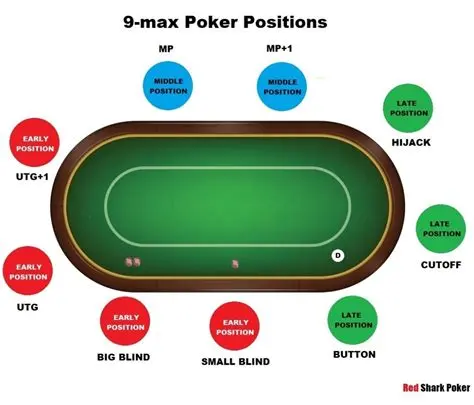
Early Position (EP)
Players seated in early positions are among the first to act in each betting round. This category includes the small blind, big blind, and under the gun (UTG) positions. EP players have limited information about opponents’ hands and must exercise caution in decision-making.
Small Blind (SB)
The spot directly to the left of the dealer button is the small blind. SB players must post a small blind before receiving cards and act first in the post-flop betting rounds. This position is considered one of the most disadvantaged in poker because of its requirement to invest chips without significant information.
Big Blind (BB)
The big blind is located to the left of the small blind and is twice the size of the small blind. BB players have the advantage of closing the betting action pre-flop but must still act early in subsequent betting rounds. Like the small blind, the big blind is considered a disadvantaged position.
Under the Gun (UTG)
The under the gun position is the first player to act pre-flop, immediately to the left of the big blind. UTG players face the challenge of acting without the benefit of observing other players’ actions, making it a position that requires tight and conservative play.
Middle Position (MP)
Players in middle positions have more information than those in early positions but less than those in late positions. This category includes players who act after the EP players but before the LP players. MP players can adopt a slightly more aggressive approach compared to EP players.
Hijack (HJ)
The hijack position is two seats to the right of the dealer button and one position to the right of the cutoff. HJ players have the advantage of acting relatively late in the pre-flop and post-flop betting rounds, allowing for a wider range of playable hands.
Cut-Off (CO)
The cutoff position is one seat to the right of the dealer button and is considered one of the most advantageous positions at the table. CO players act second to last in each round of betting, allowing them to make more informed decisions based on opponents’ actions.
Late Position (LP)
Also known as the cutoff and button, late positions offer the most advantageous position at the table. LP players act last in each round, allowing them to make informed decisions based on opponents’ actions.
Button
The button position is the most advantageous in poker, as it allows players to act last in every betting round post-flop. Button players have the opportunity to observe their opponents’ actions before making decisions, enabling them to play a wider range of hands profitably.
Small Blind (SB)
While the small blind is traditionally considered an early position, it can be viewed as a late position during the post-flop betting rounds. SB players act last in the post-flop betting rounds, providing them with a poker position advantage compared to their pre-flop situation.
Big Blind (BB)
Similar to the small blind, the big blind gains a poker position advantage during the post-flop betting rounds. BB players act last in the post-flop rounds, allowing them to make more informed decisions based on opponents’ actions.
Poker Position Challenges
Early Position Problem
Players in early positions often face the problem of playing with limited information and the risk of being out of position throughout the hand. This positional disadvantage can manifest in various problem signs, including:
Limited Hand Selection:
EP players tend to play a narrower range of hands, focusing on premium holdings to minimize risk.
Vulnerability to Aggression:
EP players are more prone to aggression from players in later positions, as they have yet to observe opponents’ actions.
Preflop Fold Frequency:
EP players may fold more frequently preflop to avoid being put in difficult post-flop situations.
Difficulty Extracting Value:
EP players may struggle to get maximum value from strong hands due to their early position, potentially leading to missed opportunities for profit.
Middle Position Flexibility
Players in middle positions enjoy greater flexibility compared to their early position counterparts but must still handle strategic challenges. Challenges in middle position play include:
Balanced Hand Selection:
MP players can afford to widen their hand selection compared to EP players but must remain cautious of late position aggression.
Adaptability:
MP players must adapt their strategies based on the actions of players in earlier positions, as well as anticipate potential moves from players in late positions.
Increased Postflop Play:
MP players are more likely to see flops and engage in post-flop play compared to EP players, leveraging their poker position advantage to make informed decisions.
Late Position Advantage
Players in late positions benefit from a poker position advantage, allowing them to use pressure on opponents and control the flow of the game. Challenges of late position play include:
Wide Hand Range:
LP players can play a wider range of hands profitably due to their positional advantage, including risky poker hands.
Aggressive Postflop Play:
LP players often use aggressive post-flop strategies to capitalize on their positional advantage, including continuation betting and bluffing.
Stealing Blinds:
LP players frequently attempt to steal blinds and bets by raising preflop from late positions, exploiting the tight ranges of players in earlier positions.
Positional Awareness:
LP players have a keen awareness of poker position dynamics, leveraging their late position to manipulate opponents and get maximum value from strong hands.
Poker Position Advantage
Understanding and effectively using poker position advantage is a key aspect of mastering online poker. Your position at the table can significantly impact your strategy, decisions, and ultimately, your success. Here’s a deeper look into how to exploit your poker position advantage.
1. Exploiting Opponents’ Weaknesses
When you have a poker position advantage, you can better observe your opponents’ actions before making your own decisions. This allows you to exploit their weaknesses and tendencies more effectively. Here’s how:
Observation:
Pay attention to how your opponents play from different positions. Are they overly aggressive or too passive? Do they bluff often or play straightforwardly? Use this information to predict their moves.
Reacting to Actions:
Since you act after your opponents in later positions, you can adjust your strategy based on their actions. If an opponent checks, you might grab the opportunity to bet and take the pot with a weaker hand.
Applying Pressure:
Use your poker position advantage to apply pressure on opponents. Players in early positions are at a disadvantage and may fold more willingly when faced with aggression from late-position players.
2. Maximizing Opportunities
Playing from a position of strength allows you to maximize your profit opportunities. Here are some strategies to consider:
Stealing Blinds:
In late positions, especially on the button or the cutoff, you have the best opportunity to steal the blinds. With fewer players left to act, your chances of success increase.
Value Betting:
When you have a strong hand, being in a late position allows you to extract more value from your bets. Opponents are more likely to call when you bet last, thinking they have a chance to win the pot.
Bluffing:
Bluffing is more effective from late positions because you have more information about the opponents’ hands. If everyone checks on you, a well-timed bluff can often win the pot.
3. Adapting to Table Dynamics
Positional advantage is flexible; it changes with the dynamics of the table. Here’s how to adapt:
Player Tendencies:
Different players have different tendencies. Some may defend their blinds aggressively, while others might fold too often. Adapt your strategy accordingly.
Table Image:
Your table image, or how others perceive you, can influence your positional strategy. If you’ve been playing tight, you can exploit this by bluffing more. Also, if you’ve been playing loose, you might want to tighten up to gain respect.
Game Flow:
The flow of the game can change. If the table is playing tight, you can afford to be more aggressive from later positions. If the table is loose, focus on value betting and extracting maximum profit from strong hands.
4. Balancing Your Range
To keep your opponents guessing, it’s important to balance your range. This means changing your play so that you’re not always predictable:
Mixing Up Play:
Don’t always raise with strong hands and call with weak ones. Sometimes, raise with a weaker hand or call with a strong hand to keep opponents off balance.
Balanced Betting:
Whether you’re bluffing or value betting, make sure your bet sizes are similar. This way, opponents can’t easily predict the strength of your hand based on your bet size.
5. Position-Specific Strategies
Each position at the table has its strategic considerations. Here’s a brief overview:
Early Position (EP):
Play tight and only with strong hands. You have the least information and the highest risk.
Middle Position (MP):
You can loosen up slightly but still need to be cautious. Play a broader range of hands than in an early position.
Late Position (LP):
This is where you can play with the widest range of hands. Take advantage of the information gained from other players’ actions.
Button:
Maximize your advantage by playing aggressively and leveraging your position to control the pot.
Blinds (SB and BB):
Develop a solid defense strategy. Don’t just fold or call; consider re-raising to challenge opponents and protect your blinds.
Factors Related to Poker Positions
Causes
Seating Order
The seating order at the poker table determines the positions players are assigned in each hand. Players seated closer to the dealer button have a positional advantage, while those in early positions face greater challenges due to acting first in each round of betting.
Dealer Button Rotation
The rotation of the dealer button clockwise around the table after each hand ensures fairness in position distribution. Understanding the movement of the dealer button is important for knowing positional changes and adapting strategies accordingly.
Hand Ranges
Positional Considerations
Players’ hand ranges differ depending on their positions at the table. Early position players tend to have tighter hand ranges, focusing on the best poker hands, while late position players can afford to play a wider range of hands profitably due to their positional advantage.
Adaptability
Players must adapt their hand ranges based on their positions and the actions of opponents. Recognizing positional dynamics allows players to make informed decisions about which hands to play and how aggressively to play them.
Psychological Factors
Positional Bias
Players may display problems based on their positions at the table, affecting their decision-making processes. Early position players may feel pressured to act cautiously, while late position players may become overconfident in their positional advantage.
Emotional Control
Maintaining emotional control is important for overcoming poker position challenges in online poker. Players must avoid becoming frustrated or sloping due to unfavorable positions, as emotional decisions can lead to costly mistakes.
Risk Factors
Lack of Positional Awareness
Players who lack awareness of poker position dynamics are at a disadvantage, as they may fail to recognize the strategic effects of their positions. Developing positional awareness through study and practice is essential for improving performance at the tables.
Overcommitment in Early Positions
Early position players are at risk of overcommitting to hands without sufficient information, leading to costly mistakes. Avoiding overcommitment and playing cautiously in early positions can reduce this risk.
Exploitation by Opponents
Opponents may exploit players’ poker position weaknesses by applying pressure in advantageous positions or targeting vulnerable early position players. Recognizing opponents’ strategies and adjusting accordingly is key to reducing this risk.
Online Poker Position Skills
Positional Awareness
Developing positional awareness is important for success in online poker. Players can analyze their poker position proficiency through different tests and strategies, including:
Hand History Review:
Analyzing past hands to evaluate decision-making based on position. Look for patterns of play in different positions and identify areas for improvement.
Positional Drills:
Practice specific scenarios in different positions to enhance positional understanding. Focus on adjusting strategies based on position and opponent tendencies.
Simulation Tools:
Utilize poker simulation software to simulate hands and scenarios, allowing for experimentation with different poker position strategies and analyzing outcomes.
Peer Feedback:
Seek feedback from fellow players or poker coaches to gain insights into poker position play. Discuss hand histories, strategies, and positional concepts to identify strengths and weaknesses.
Hand Range Analysis
Analyzing hand ranges based on position is crucial for making informed decisions in online poker. Players can diagnose their hand range proficiency through the following methods:
Hand Range Visualization:
Visualize optimal hand ranges for different positions and compare them to actual in-game decisions. Identify deviations from optimal ranges and assess the rationale behind these deviations.
Calculation:
Calculate the equity of different hand ranges in various positions to understand their relative strength. Use calculators to analyze potential outcomes and optimize decision-making.
Range Construction Exercises:
Practice constructing balanced hand ranges for different positions, considering factors such as position, stack sizes, and opponent tendencies. Evaluate the effectiveness of constructed ranges in different scenarios.
Psychological Conditioning
Managing psychological factors is important for maintaining the best performance in online poker. Players can analyze their psychological conditioning through the following strategies:
Mindfulness Practices:
Incorporate mindfulness techniques to stay present and focused during gameplay. Practice breathing exercises, meditation, or visualization to reduce anxiety and improve concentration.
Emotional Regulation:
Learn to recognize and regulate emotions during gameplay, particularly in response to poker position challenges. Develop coping strategies for dealing with frustration, tilt, or anxiety arising from unfavorable positions.
Positive Reinforcement:
Make a positive mindset by celebrating successes and learning from setbacks. Focus on progress and acknowledge improvements in poker position play to maintain positive habits.
Ways To Improve
Positional Strategy Adjustment
Adjusting strategies based on position is crucial for optimizing performance in online poker. Players can use the following options to improve their positional play:
Tighten Early Position Ranges:
In early positions, prioritize playing premium hands that have strong equity against opponents’ ranges. Avoid marginal hands that are vulnerable to being dominated.
Expand Late Position Ranges:
Take advantage of late position opportunities to play a wider range of hands profitably. Incorporate speculative hands and suited connectors into your late position opening ranges.
Utilize Positional Aggression:
Use your poker position advantage to apply pressure on opponents and control the flow of the game. Use aggressive betting and raising techniques to exploit positional weaknesses and extract value from strong hands.
Table Image Management
Managing your table image effectively can influence opponents’ perceptions and reactions to your positional plays. Consider the following ways to improve:
Project Confidence:
Projecting confidence and boldness at the table can intimidate opponents and discourage them from exploiting your positional weaknesses.
Mix Up Play:
Avoid becoming predictable by mixing up your play in different positions. Balance aggressive and passive actions to keep opponents guessing and prevent them from exploiting your tendencies.
Exploit Table Dynamics:
Pay attention to opponents’ tendencies and adjust your table image accordingly. Adapt your playing style to exploit the weaknesses of opponents and capitalize on poker position advantages.
Continuation Betting
Continuation betting (c-betting) is a valuable tactic for maintaining aggression and momentum in online poker. Implement the following treatment options to improve your c-betting strategy:
Identify Favorable Boards:
Look for favorable flops that are likely to miss opponents’ ranges or provide opportunities for winning a game. Continuation bet on dry boards to apply pressure on opponents.
Balance C-Betting Frequency:
Mix up your c-betting frequency to keep opponents guessing and prevent them from exploiting your tendencies. Mix checks and delayed c-bets into your post-flop tool to maintain balance.
Consider Opponent Tendencies:
Take into account opponents’ tendencies and playing styles when deciding whether to continue the bet. Adapt your c-betting strategy based on opponents’ likelihood to fold or continue with their hands.
Conclusion
In conclusion, mastering online poker positions requires a combination of knowledge, practice, and psychological resilience. By implementing preventive measures and continuously refining positional skills, players can elevate their gameplay and achieve long-term success in the competitive world of online poker. So, remember to embrace the nuances of positional play, adapt your strategies accordingly, and always strive for improvement at the tables.
FAQs
What is the significance of the button position in online poker?
The button position, also known as the dealer position, provides the most advantageous position at the table as the player on the button acts last in each betting round.
How can I improve my positional awareness in online poker?
Developing positional awareness requires practice and observation. Pay close attention to your opponent’s actions and how they vary based on their positions.
Are there any specific strategies for playing from an early position?
When playing from an early position, it’s advisable to be more selective with your starting hands and avoid overly aggressive plays.
What are the main differences between playing with the small blind and the big blind?
While both the small blind and big blind have forced bets, the big blind has the advantage of acting last before the flop, whereas the small blind acts first.
How can I adjust my positional strategy in different poker variants?
Each poker variant may require slight adjustments in positional strategy due to variations in betting structures and hand rankings. It’s essential to familiarize yourself with the specific rules of each variant and adapt accordingly.





Related Post
- Why Scatter Game is So Addictive: The Psychology Behind the Obsession
- Online Slot Developers: Key Players in the Gaming Revolution
- Play Boxing King at 7XM | Win The Knockout Slot Game by Jili
- Play Wild Bandito: Exciting Slots with Mexican Flair at 7XM
- Mahjong Ways Slot: Classic Mahjong Meets Modern Slot Action
Explore ScatterPH’s Top Features and Games
Lottery and Sports Betting
- Best Destination for Lottery Gaming: Discover why ScatterPH is the top choice for lottery enthusiasts.
- Your Ultimate Destination for Sports Betting: Dive into comprehensive sports betting options for all major events.
- 7XM and Responsible Sports Betting: Learn about responsible sports betting practices.
Casino Games and Live Casino
- Premier Destination for Slot Machine Thrills: Experience the excitement of slot machines.
- Best Casino for Fish Games and Online Fun: Enjoy a variety of fish games and more.
- Live Casino: Engage with real-time casino action and live dealers.
Poker
- Online Poker Hands: Learn about different poker hands and strategies.
- Super Ace Jili: Check out the popular Super Ace Jili game.
- Poker Bluff: Master the art of bluffing in poker.
- Poker vs. Blackjack: Compare the thrills of poker and blackjack.
- Online Poker Hold’em: Get tips on playing Hold’em online.
Featured Casinos and Games
- Discover 7XM: Premier Online Casino: Explore the features of 7XM, a leading online casino.
- Fishing Games at 7XM Online Casino: Discover exciting fishing games available at 7XM.
- 747 Live Casino: Experience the vibrant atmosphere of the 747 live casino.
- Keno at Scatter PH: Enjoy the classic game of Keno at Scatter PH.
- Crazy Time Live: Get in on the fun with Crazy Time Live.
Leave a Reply