
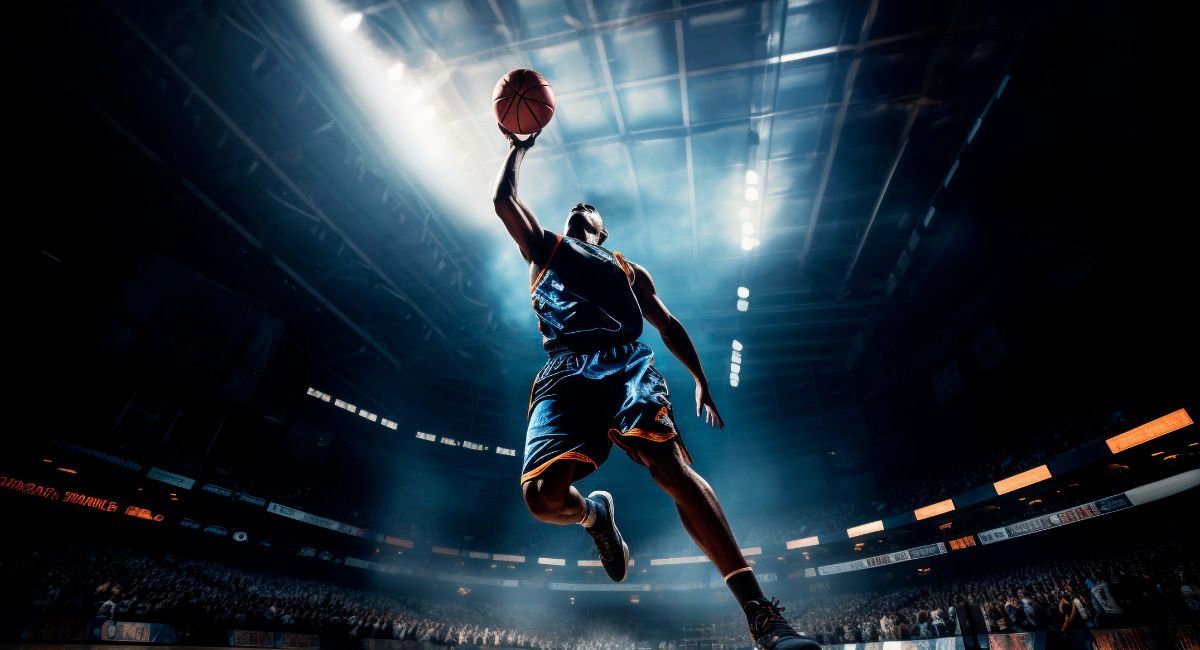
Hey players, want to improve your winning percentage in NBA online betting? Then let’s look into the basic of basketball to understand more about the game. Basketball, the sport that ignites passion from neighborhood courts to international arenas.
It’s more than just a game; it’s a mesmerizing fusion of athleticism, strategy, and teamwork that hooks millions of fans worldwide. Whether you’ve been playing since childhood or you’re simply captivated by the spectacle, basketball’s journey from its humble beginnings to becoming a global phenomenon is a story worth exploring.
Introduction to Basketball
Basketball originated in 1891 in Springfield, Massachusetts, when Dr. James Naismith invented it as an indoor game to keep his students active during winter.
Using a soccer ball and two peach baskets as goals, Naismith laid the groundwork for a sport that would captivate players and fans alike across the globe. The name “basketball” itself reflects its origins—the early days when players had to retrieve the ball from peach baskets after every score.
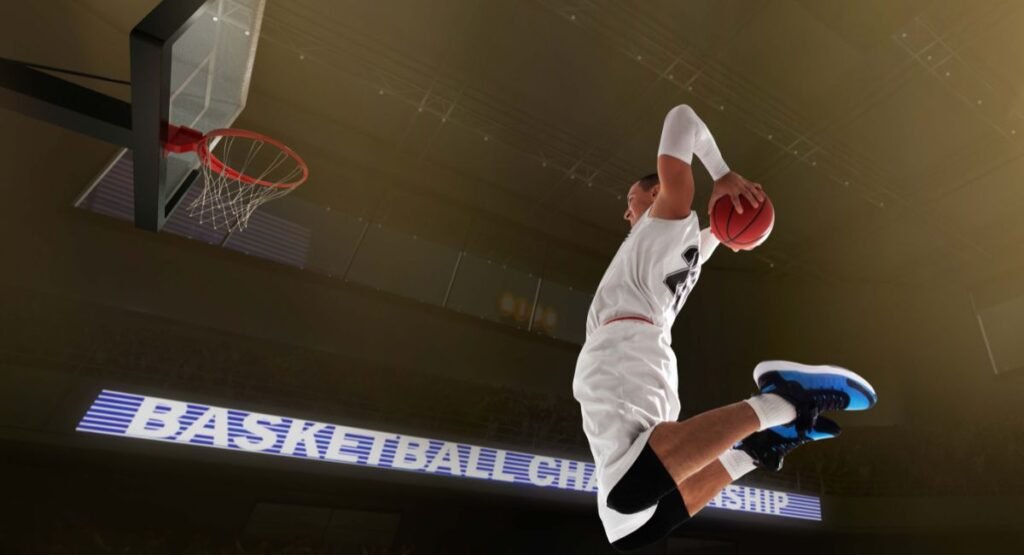
The game has evolved significantly since its inception. From the YMCA gymnasiums to the gleaming courts of the NBA, basketball’s rise to prominence mirrors its ability to blend physical prowess with strategic finesse.
Today, it’s not just about making baskets but also about outmaneuvering opponents with quick passes, precise shooting, and defensive prowess. Beyond its competitive aspect, basketball has become a cultural touchstone, influencing fashion, music, and global popular culture.
Icons like Michael Jordan and LeBron James have transcended the sport to become global ambassadors, inspiring millions and cementing basketball’s place as a universal language of athleticism and camaraderie.
Whether you’re a player, a fan, or simply someone who appreciates the thrill of the game, basketball continues to captivate and unite people of all ages and backgrounds worldwide.
Where did Basketball Originate?
Basketball originated in Springfield, Massachusetts, USA, in 1891. It was invented by Dr. James Naismith, a Canadian physical education instructor at the International YMCA Training School (now Springfield College).
Naismith created the game as an indoor activity to keep his students active during the winter months. The first game was played with a soccer ball and two peach baskets as goals, leading to the name “basket ball.”
What is Basketball?
Basketball, renowned for its dynamic pace and strategic depth, is a team sport that pits two squads of five players each against each other in a thrilling contest of skill and athleticism. Played on a rectangular court, each team aims to score points by maneuvering a ball through their opponent’s hoop, positioned ten feet above the ground at opposite ends of the court.
The game is a spectacle of precision passing, agile dribbling, and strategic positioning, where players orchestrate offensive plays and defensive strategies in real-time to gain an edge over their adversaries.
The essence of basketball lies in its fluidity and versatility. Players engage in rapid transitions between offense and defense, employing a mix of physical agility and mental acuity to outwit their opponents.
Every possession is a tactical exchange, with teams strategically positioning themselves to maximize scoring opportunities while minimizing their opponent’s chances.
Whether executing a perfectly timed alley-oop or skillfully contesting a shot at the buzzer, basketball demands both individual prowess and cohesive teamwork to achieve victory.
At its core, basketball is a sport that transcends boundaries, captivating audiences worldwide with its blend of athleticism and strategic depth.
From grassroots leagues to professional arenas, the game’s universal appeal lies in its ability to inspire teamwork, foster competitive spirit, and showcase moments of unparalleled athleticism that resonate with fans of all ages.
Rules and Gameplay
Basketball unfolds in a structured yet fluid manner, governed by a set of rules designed to ensure fairness and uphold the integrity of the game. Each match is divided into four quarters, with each quarter lasting twelve minutes at the professional level, though variations exist across different levels of play.
The objective for each team is to outscore their opponent by efficiently converting field goals, which vary in value depending on the shooter’s distance from the basket, or by successfully making free throws from the foul line, each worth one point.
Central to basketball’s gameplay is the concept of dribbling, a skill where players bounce the ball while in motion to navigate towards the opposing team’s hoop. Dribbling allows for strategic positioning and opens up opportunities for both solo maneuvers and team plays.
Equally crucial is passing, where players use precise throws to move the ball between teammates, facilitating collaborative efforts to outmaneuver defensive strategies and create scoring opportunities.
However, adherence to the game’s regulations is paramount. Violations such as traveling, where a player moves without dribbling the ball, result in turnovers, allowing possession to transfer to the opposing team. Similarly, fouls, involving illegal physical contact, prompt penalties that can include free throws or possession changes.

Players must exhibit a blend of physical prowess and tactical awareness to navigate these rules effectively while maintaining momentum in their team’s favor.
Beyond these fundamental aspects, basketball thrives on strategy and spontaneity. Teams strategically deploy offensive formations and defensive tactics tailored to exploit opponents’ weaknesses and protect their own basket.
Coaches and players alike analyze opponents’ tendencies, devise game plans, and adjust strategies in real-time to capitalize on evolving game dynamics. This dynamic interplay of skill, strategy, and regulation ensures that each basketball game is not just a test of physical abilities but also a showcase of mental agility and teamwork under pressure.
Basketball Positions and Player Roles
In basketball, players are typically divided into five positions, each with specific roles and responsibilities:
Center: Usually the tallest player on the team, centers play near the basket on both offense and defense, focusing on rebounding, shot-blocking, and scoring close to the hoop.
Point Guard: Often the team’s primary ball- handler and playmaker, responsible for setting up offensive plays and distributing the ball to teammates.
Shooting Guard: Known for scoring from the perimeter and driving to the basket, shooting guards are versatile scorers who excel in shooting accuracy.
Small Forward: Combines elements of both shooting guards and power forwards, often playing on the wing and contributing to scoring and rebounding.
Power Forward: A versatile player who plays close to the basket, power forwards excel in rebounding, scoring inside, and defending against opposing big men.
Evolution of the Game
Since its inception in 1891 at a YMCA in Springfield, Massachusetts, basketball has evolved into a globally revered sport. Dr. James Naismith’s creation, initially devised to keep students active indoors during winter, quickly gained traction across the United States and beyond.
His use of a soccer ball and peach baskets as goals laid the foundation for a game that would capture the hearts and imaginations of millions worldwide.
Over time, basketball’s rules underwent refinement to ensure fairness and consistency across various playing environments.

Innovations such as dribbling, which allowed players to maneuver with the ball, and a standardized scoring system based on shot distance, further enhanced the game’s appeal and strategic depth.
These developments set the stage for basketball’s rapid rise in popularity and its eventual establishment as a global sporting phenomenon.
The NBA’s inception in 1946 marked a pivotal moment in basketball’s evolution, transforming it into a professional spectacle renowned for its athleticism and fierce competition. The league’s growth not only elevated basketball’s status but also inspired generations of players and fans globally.
Today, from grassroots leagues nurturing young talent to international competitions showcasing elite athletes, basketball continues to thrive as a universal language of athleticism, teamwork, and cultural unity.
Cultural Impact and Global Reach
Basketball has transcended its status as a sport to become a global cultural phenomenon, influencing fashion, music, and entertainment on a profound level. The sport’s iconic figures like Michael Jordan, Kobe Bryant, and LeBron James have not only dominated the courts but also become influential cultural icons whose impact resonates worldwide. Their charisma, athleticism, and off-court style have set trends that transcend borders, inspiring generations and shaping popular culture.
Fashion has been significantly shaped by basketball, with players’ distinctive styles influencing trends both on and off the court. From Michael Jordan’s groundbreaking Air Jordan sneakers to Kobe Bryant’s sleek and sophisticated fashion choices, basketball players have consistently driven innovation and set new standards in athletic apparel and streetwear.
The NBA’s collaborations with major brands have further amplified basketball’s influence in the fashion industry, blending sports performance with cutting-edge design.
Music has also been deeply impacted by basketball’s dynamic energy and emotional intensity. The sport has inspired countless anthems and soundtracks that celebrate its competitive spirit and the camaraderie among teammates.
Artists across genres have paid homage to basketball in their lyrics and performances, reflecting its universal appeal and ability to connect with diverse audiences worldwide.
As basketball continues to evolve and capture the imagination of fans globally, its cultural significance as a unifying force in fashion, music, and entertainment remains undeniable.
More Information About Basketball
As basketball gained popularity and underwent various refinements in its rules and equipment, the essence of the game remained tied to its original elements.
Despite advancements such as the replacement of peach baskets with metal hoops and the introduction of backboards to rebound missed shots, the term “basketball” continued to be used universally to describe the sport itself.
Why is it Called Basketball?
The name “basketball” finds its roots in the very equipment that defined the early days of the sport. When Dr. James Naismith invented basketball in 1891, he sought a way to keep his students physically active during the winter months at the YMCA International Training School in Springfield, Massachusetts.
His solution was a game that utilized a soccer ball and peach baskets as the goals. These baskets were affixed to a railing, standing about 10 feet above the gymnasium floor. Players scored points by successfully tossing the soccer ball into the opposing team’s peach basket, sparking the beginnings of what would become a global phenomenon.
This continuity not only pays homage to the game’s humble beginnings but also underscores its historical significance and evolution over time.
Today, the term “basketball” has become synonymous with a dynamic and fast-paced sport that showcases athleticism, skill, and teamwork on courts worldwide.
It serves as a reminder of Dr. Naismith’s ingenuity and the enduring legacy of a game that has transcended its origins to become a beloved pastime enjoyed by millions of players and fans alike across cultures and continents.
Historical Context of Basketball
Dr. James Naismith’s creation of basketball in 1891 was spurred by a specific challenge from his supervisor at the YMCA Training School in Springfield, Massachusetts.
Confronted with the need for a game that could keep athletes active indoors during the harsh New England winters, Naismith embarked on a mission to invent a new sport that blended athleticism with strategic thinking.
Drawing inspiration from various sports like soccer, rugby, and lacrosse, Naismith aimed to create a game that would not only provide physical exercise but also foster teamwork and skill development among his students.
The initial concept of basketball underwent rapid development as Naismith experimented with different rules and equipment setups. The first game of basketball was played on December 21, 1891, with 18 players split into two teams.
The objective was simple yet challenging: to score points by tossing a soccer ball into the opposing team’s peach baskets, which were mounted on a railing approximately 10 feet above the ground. This makeshift setup was the humble beginning of a sport that would soon capture the imagination of players and fans worldwide.
Naismith’s innovative spirit and commitment to creating a game that balanced physical exertion with skillful play laid the groundwork for basketball’s enduring popularity.
As the sport gained traction, Naismith continued to refine its rules, gradually shaping basketball into a structured and competitive game that emphasized agility, strategy, and sportsmanship. His pioneering efforts not only addressed the immediate need for indoor recreational activities but also established a legacy that continues to thrive over a century later.
Spread and Growth of Basketball
Basketball’s rapid spread was facilitated by the extensive network of YMCA institutions across the United States and beyond. Within a few short years of its inception in 1891, the sport captivated the imagination of both men and women seeking a dynamic and engaging indoor activity.
The YMCA played a pivotal role in promoting basketball, utilizing its widespread presence to introduce the sport to communities across America. As interest grew, local YMCAs began adopting and adapting the game, further fueling its popularity.
By the turn of the 20th century, basketball had firmly established itself as a beloved pastime, prompting the need for standardized rules and organized competitions.
In 1893, the first official rules of basketball were published, providing a clear framework for gameplay and ensuring consistency across different YMCA chapters and leagues. This milestone marked a crucial step in basketball’s evolution from a novel gymnasium activity to a structured sport embraced by a growing number of enthusiasts.
As the game continued to evolve, so did its equipment. Innovations such as backboards were introduced to rebound missed shots, enhancing the flow and strategy of the game. The iconic peach baskets, initially used as goals, were eventually replaced with metal rims and nets. This modification allowed for easier retrieval of the ball after a successful shot, contributing to the game’s faster pace and increasing its appeal among players and spectators alike.
The combination of organized competitions, standardized rules, and improved equipment propelled basketball into a new era of popularity and growth. It became not only a recreational activity but also a competitive sport that fostered camaraderie, skill development, and community engagement. As basketball spread beyond YMCA gyms to schoolyards, colleges, and eventually professional leagues, it solidified its status as a global phenomenon that continues to unite people of all backgrounds through the shared love of the game. Right now, our modern world especially online casino’s and other betting sites allowed NBA online betting for diversed live casino players of all ages and races.
How to Win in Basketball – Things to Understand in NBA Online Betting
To improve your chances of winning in Basketball or any NBA online betting, then this section is helpful for you.
The Basic Winning Mentality
Winning in basketball requires a combination of skill, strategy, teamwork, and athleticism. Here are key elements to consider:
Offensive Strategies
- Shooting: Mastering shooting techniques, including jump shots, layups, and three-pointers, is essential. Players must develop accuracy and consistency in shooting from various distances.
- Ball Movement: Effective passing and dribbling create opportunities to score by moving the ball quickly around the court and finding open teammates.
- Spacing: Maintaining proper spacing on offense allows players to exploit defensive weaknesses and create scoring opportunities near the basket or from outside.
Defensive Strategies
- Man-to-Man Defense: Players guard specific opponents to prevent them from scoring or passing effectively. Communication and quick reactions are crucial.
- Zone Defense: Players defend specific areas of the court rather than individual opponents, aiming to disrupt passing lanes and force opponents into difficult shots.
- Rebounding: Securing rebounds (collecting missed shots) is vital for ending defensive possessions and initiating offensive opportunities.
Teamwork and Communication
Successful teams excel in teamwork, with players understanding their roles and responsibilities on both offense and defense. Effective communication on the court enhances coordination and decision-making, facilitating seamless transitions between offense and defense.
Coaching and Strategy
Coaches play a pivotal role in developing game plans, analyzing opponents’ strengths and weaknesses, and making strategic adjustments during games. They emphasize discipline, execution of fundamentals, and situational awareness to maximize team performance.
Future Trends and Innovations
Looking ahead, basketball is poised to continue evolving with advancements in technology, sports science, and global outreach. Innovations in player analytics, training methodologies, and fan engagement are shaping the future landscape of the sport.
The rise of international talent and the globalization of basketball further underscore its status as a truly global game. As basketball evolves, its ability to inspire and unite people from diverse backgrounds remains a testament to its enduring appeal and significance in the world of sports. Technology opens up new channels for opportunities for new and diversed viewers and also for sports betting.
Conclusion
Basketball’s enduring popularity stems from its dynamic gameplay, rich history, and cultural impact. From its origins in a Springfield gymnasium to the global stage of the NBA and international competitions, basketball continues to captivate players and fans alike.
Whether played competitively or casually, basketball remains a symbol of athleticism, teamwork, and the pursuit of excellence.
Understanding its rules, strategies, and cultural significance enhances not just the appreciation for this beloved sport. It also influence on sports culture worldwide but it improves NBA online betting chances of winning. Play betting now in scatterph and win huge prices!
Key Takeaways
- Stay informed about innovations in technology and sports science that shape the future of basketball. These advancements impact player performance and team dynamics, influencing betting strategies.
- Know the rules, positions, and strategies that shape basketball’s gameplay. From offensive tactics like shooting and ball movement to defensive strategies such as man-to-man and zone defense, a comprehensive understanding enhances betting decisions.
- Appreciate the importance of teamwork, coaching strategies, and player roles. Effective communication and strategic coaching decisions are crucial factors that can sway game outcomes and affect betting odds.




Related Blog Posts:
Explore ScatterPH’s Top Features and Games
Lottery and Sports Betting
- Best Destination for Lottery Gaming: Discover why ScatterPH is the top choice for lottery enthusiasts.
- Your Ultimate Destination for Sports Betting: Dive into comprehensive sports betting options for all major events.
- 7XM and Responsible Sports Betting: Learn about responsible sports betting practices.
Casino Games and Live Casino
- Premier Destination for Slot Machine Thrills: Experience the excitement of slot machines.
- Best Casino for Fish Games and Online Fun: Enjoy a variety of fish games and more.
- Live Casino: Engage with real-time casino action and live dealers.
Poker
- Online Poker Hands: Learn about different poker hands and strategies.
- Super Ace Jili: Check out the popular Super Ace Jili game.
- Poker Bluff: Master the art of bluffing in poker.
- Poker vs. Blackjack: Compare the thrills of poker and blackjack.
- Online Poker Hold’em: Get tips on playing Hold’em online.
Featured Casinos and Games
- Discover 7XM: Premier Online Casino: Explore the features of 7XM, a leading online casino.
- Fishing Games at 7XM Online Casino: Discover exciting fishing games available at 7XM.
- 747 Live Casino: Experience the vibrant atmosphere of the 747 live casino.
- Keno at Scatter PH: Enjoy the classic game of Keno at Scatter PH.
- Crazy Time Live: Get in on the fun with Crazy Time Live.
Leave a Reply