
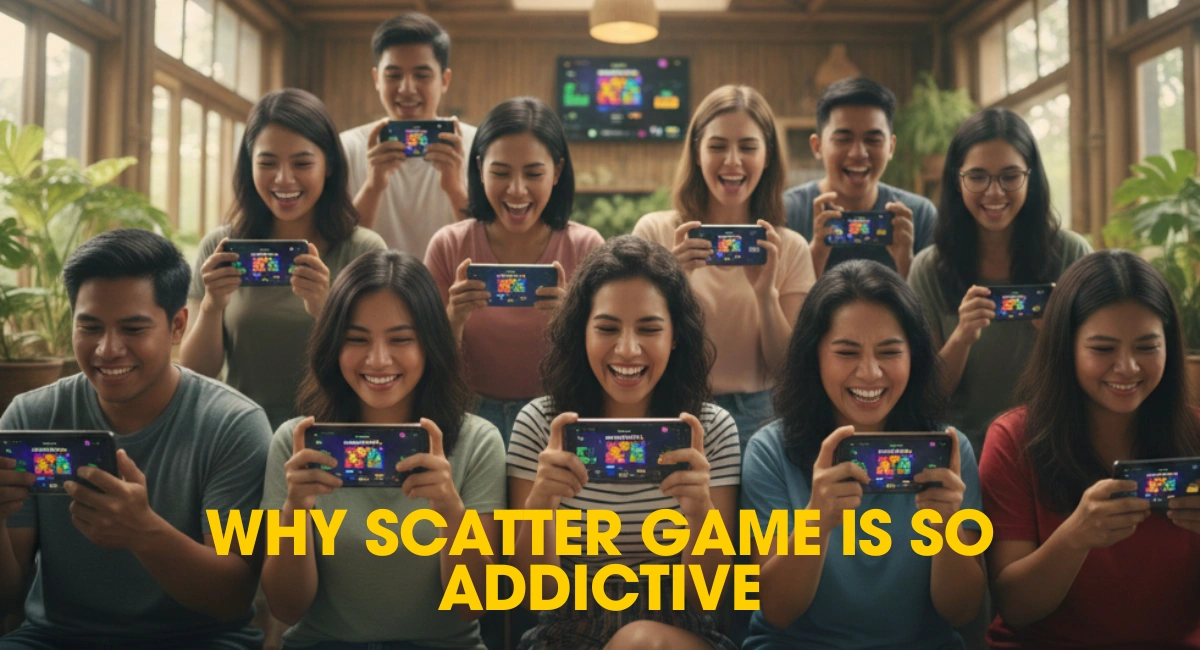
Scatter has become one of the most downloaded mobile games in the world, and if you’ve played it, you probably understand why you can’t put it down. What starts as “just one quick round” turns into hours of gameplay. But there’s actual psychology behind this addiction. Let’s break down why Scatter is so compelling and what keeps millions of players coming back every single day.
The Perfect Storm of Game Design
Scatter isn’t accidentally addictive. It’s engineered to hit specific psychological triggers that our brains are hardwired to respond to. The game combines multiple elements that work together to create an almost irresistible experience.
1. Time Pressure Creates Urgency
The 3-minute timer in Scatter creates what psychologists call “time scarcity stress.” When you have limited time, your brain perceives the challenge as more urgent and important. This triggers your nervous system, making your body release small amounts of adrenaline. You’re literally in a state of heightened focus, which feels engaging and exciting.
Unlike games where you can take your time, Scatter forces you to make quick decisions. This taps into a primal survival instinct. Your brain loves this type of challenge because it mimics real-world problem-solving under pressure. The result? Pure engagement.
2. Variable Rewards Keep You Hooked
Scatter uses variable reward mechanics, which is the same psychological principle that makes slot machines so addictive. You never know exactly which words you’ll find or how many points you’ll earn. Sometimes you get a really good round, sometimes you don’t. This unpredictability makes your brain release dopamine every time you complete a round.
Variable rewards are more addictive than consistent rewards. If you knew exactly what you’d get every time, the game would feel boring. But because the outcomes vary, your brain keeps hoping for that next big win. This is why players say “just one more game” for hours.
3. Easy to Learn, Hard to Master
Scatter has one of the lowest barriers to entry of any mobile game. Anyone can understand the concept in 10 seconds. You find words in a grid of letters. That’s it.
But there’s incredible depth underneath. As you play more, you develop strategies. You learn common letter patterns. You discover that certain letter combinations appear frequently. You start seeing words before others do. This creates a skill ceiling that rewards continued practice.
This combination is addictive because beginners feel instant success while experienced players have something to work toward. Everyone feels good playing, just at different levels.
4. The Competitive Element
When you see your score at the end of a round, your brain immediately compares it to previous performances and other players. Humans are inherently competitive creatures, even when we’re competing alone.
Many versions of Scatter include leaderboards, multiplayer modes, or daily challenges. Suddenly, it’s not just about playing a game. It’s about beating someone else or beating your own record. This social comparison triggers a powerful motivational force that keeps you returning.
Even in single-player versions, you’re competing against yourself. Can you beat your high score? This self-competition is still incredibly motivating.

Slot Machines
We pride ourselves on offering a vast selection of slot machines in Scatter PH to suit every taste and preference. From classic fruit machines and Vegas-style slots to modern video slots and progressive jackpots, there’s something for everyone in our extensive collection. With hundreds of titles to choose from, the excitement never stops.
5. Accessibility Paradox
You can play Scatter anywhere. It’s on your phone, in your pocket, available instantly. There’s virtually no friction between the desire to play and actually playing.
But here’s the paradox: because it’s always accessible, it becomes easier to play “just one more round.” Mobile games exploit this accessibility. There’s no complicated setup, no long load times, no commitment required. You can fit a round into literally any gap in your day.
This accessibility, combined with the short play sessions, means Scatter can colonize every moment of free time. You’re waiting for coffee? One round. In line at the store? One round. Watching TV? One round while watching.
6. Daily Streaks and Habit Formation
Many Scatter games feature daily challenges or streak counters. Your brain loves patterns and consistency. When you start a streak, your brain wants to maintain it.
Psychologists call this “commitment and consistency.” Once you’ve done something for a few days, you feel obligated to keep doing it. Missing a day feels like failure. This is why people brush their teeth every day and why daily Scatter streaks are so effective at bringing players back.
Your brain literally rewires itself with habit formation. After playing for a couple weeks, Scatter becomes part of your routine. It’s not a conscious decision anymore. It’s automatic.
7. The Flow State
Flow state is what psychologists call being “in the zone.” It’s when the challenge level perfectly matches your skill level. Not too hard (which causes frustration), not too easy (which causes boredom).
Scatter is incredibly good at maintaining this balance. The random letter grid means you’ll always face new combinations. But the core mechanics stay simple enough that you can quickly fall into a rhythm. Experienced players feel themselves slipping into flow state almost immediately. That feeling is euphoric and addictive.
When you’re in flow, time seems to disappear. An hour passes like 10 minutes. This is partly why people play for so much longer than they intend.
8. Social Connection and Community
If you play Scatter, you probably have friends who play too. You share scores, challenge each other, talk about strategies.
This social element turns a solo game into a shared experience. Your brain values connection and belonging. When a game helps you feel part of a community, it becomes much more than a game. It becomes a way to connect with others.
This is why multiplayer modes are so popular, even if they’re stressful. Playing against friends or strangers creates social investment that keeps you coming back.
The Brain Chemistry Behind the Addiction
When you play Scatter, your brain releases several chemicals that feel good. Dopamine is the primary culprit. Every time you find a word, complete a level, or beat your high score, your brain releases a small amount of dopamine.
Dopamine is often called the “motivation chemical.” It’s not just about feeling good. It drives you to repeat behaviors. This is why experienced Scatter players describe feeling almost pulled toward the game. Their brains literally want more dopamine.
The variable reward structure (sometimes you win big, sometimes you don’t) is especially effective at stimulating dopamine production. Your brain becomes uncertain about the outcome, which makes winning even more rewarding.
Over time, you need more dopamine hits to feel the same level of satisfaction. This tolerance is why “just one more game” becomes five more games, then 10 more games.
Why Scatter Specifically Is So Addictive
Scatter isn’t just any word game. It has specific characteristics that amplify the addictive potential:
Speed-based gameplay: Unlike crosswords or Wordle, which let you think at your own pace, Scatter forces rapid decision-making. This activates the urgency pathways in your brain.
Instant feedback: After every single action, you get feedback. Find a word, you see the points immediately. This constant feedback loop keeps your attention locked in.
Word variety: Because the letter grid is different every game, you never fully master the game. There’s always something new. This combats habituation.
Low stakes, high engagement: Nobody gets hurt if you lose. There’s no real-world consequence. But the game is still engaging. This is the sweet spot for addiction.
Is Scatter Addiction a Problem?
Here’s the reality: Scatter addiction is rarely a serious problem for most people. It’s not like addiction to substances or gambling. You’re not going to lose your house playing Scatter.
However, any addictive activity can become problematic if it interferes with sleep, work, relationships, or health. If you find yourself playing instead of sleeping or neglecting responsibilities, it might be time to set some boundaries.
The good news is that Scatter is relatively benign as addictions go. It’s not expensive. It doesn’t require you to buy loot boxes or spend money (depending on the version). It’s mentally stimulating rather than numbing.
If you want to enjoy Scatter without it taking over your life, try these strategies:
Set a timer before you play and stick to it. Once the timer goes off, stop.
Play in specific situations only, like during your commute, not throughout your entire day.
Uninstall the app for a week and notice how you feel. This helps you regain control over the habit.
The Bottom Line
Scatter is addictive because it’s been designed (either intentionally or through iteration) to hit multiple psychological triggers simultaneously. Time pressure, variable rewards, low difficulty barrier, competition, accessibility, habit formation, flow state, and social connection all work together to create an experience that’s hard to put down.
Understanding why you’re addicted is actually empowering. Once you know the mechanics, you can play deliberately rather than compulsively. You can enjoy Scatter without feeling like it’s controlling you.
The Scatter PH game is genuinely fun and mentally stimulating. That’s why it’s downloaded hundreds of millions of times. And now you understand exactly why you can’t stop playing.
Leave a Reply